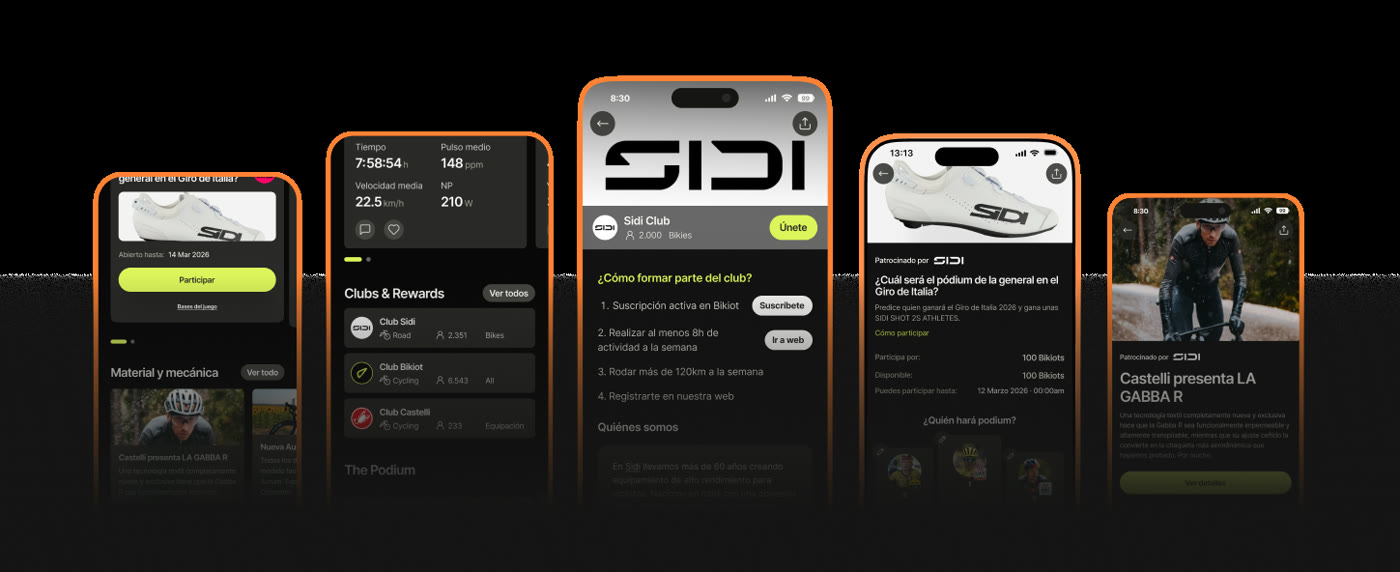
Bikiot
- Role
- Founding Designer
- Team
- Product and brand, with Productea
- Platforms
- iOS and Android
- Outcome
- 0-to-1 product
A digital passport for your bicycle: the app, the IoT tag and the brand, from zero. I was the founding designer.
A bike with no story
A stolen or resold bike has no story it can prove. Ownership is a receipt in a drawer and maintenance lives in someone’s memory. Bikiot ties a digital passport to the bike itself, backed by a physical tag.
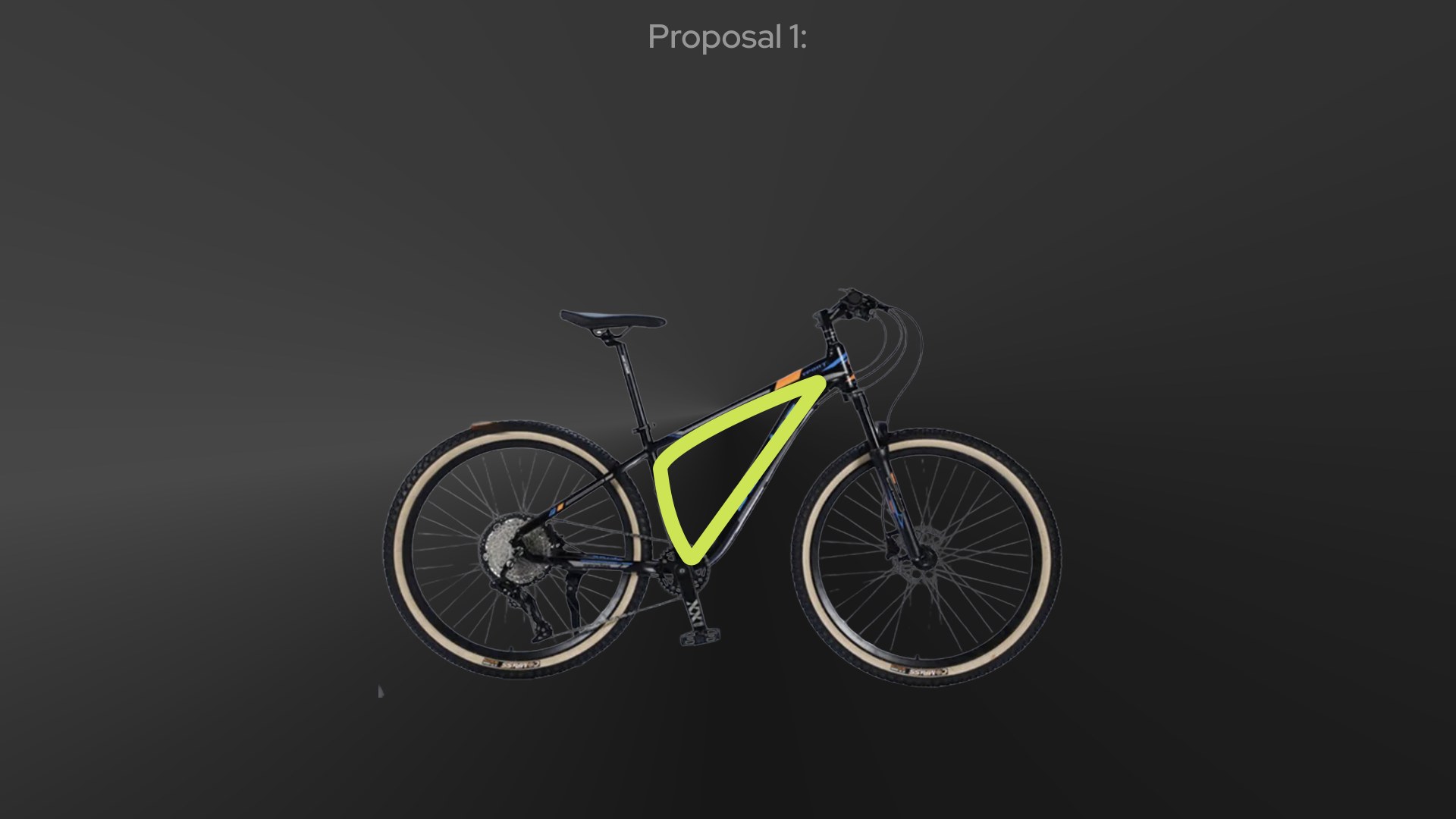
The mark is the frame
Instead of an arbitrary icon, the mark is traced from a real bike frame: the down tube and head tube, isolated and simplified. It reads on light, dark and the brand’s volt green.

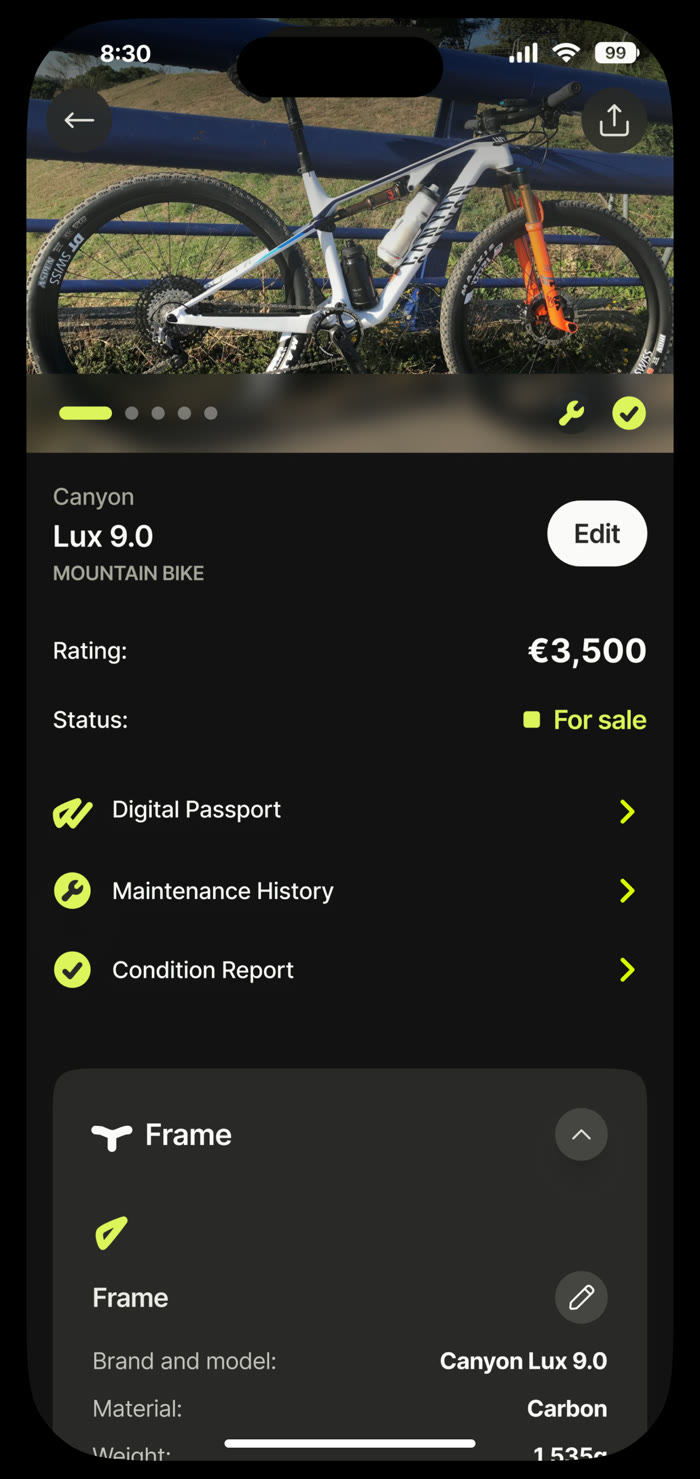
Three records deep
The bike’s own photo leads, with Digital Passport, Maintenance History and Condition Report as three entries below: the record a buyer wants before paying for someone else’s bike.
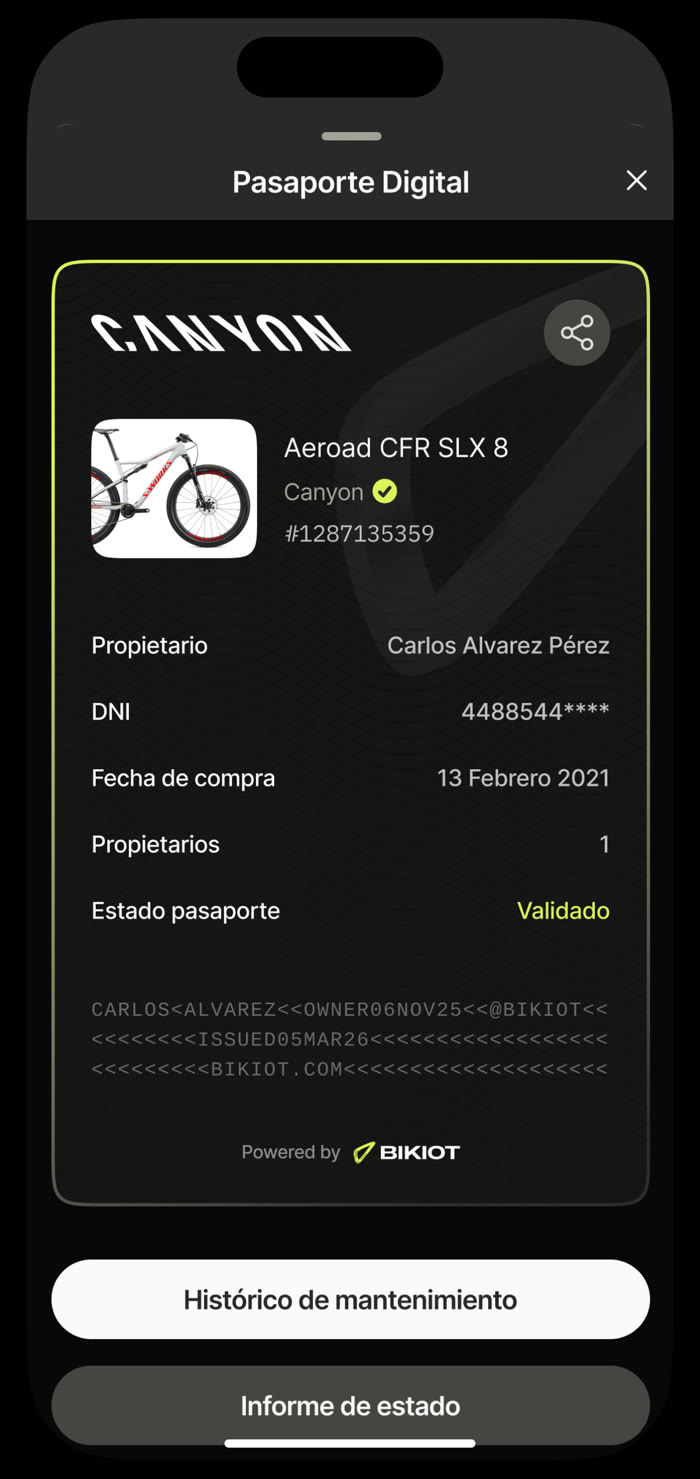
Read like a passport
Owner, ID, purchase date and validation status, laid out with the authority of a government document, down to an MRZ-style block. The borrowed familiarity says “this is a verifiable record”.
Hardware
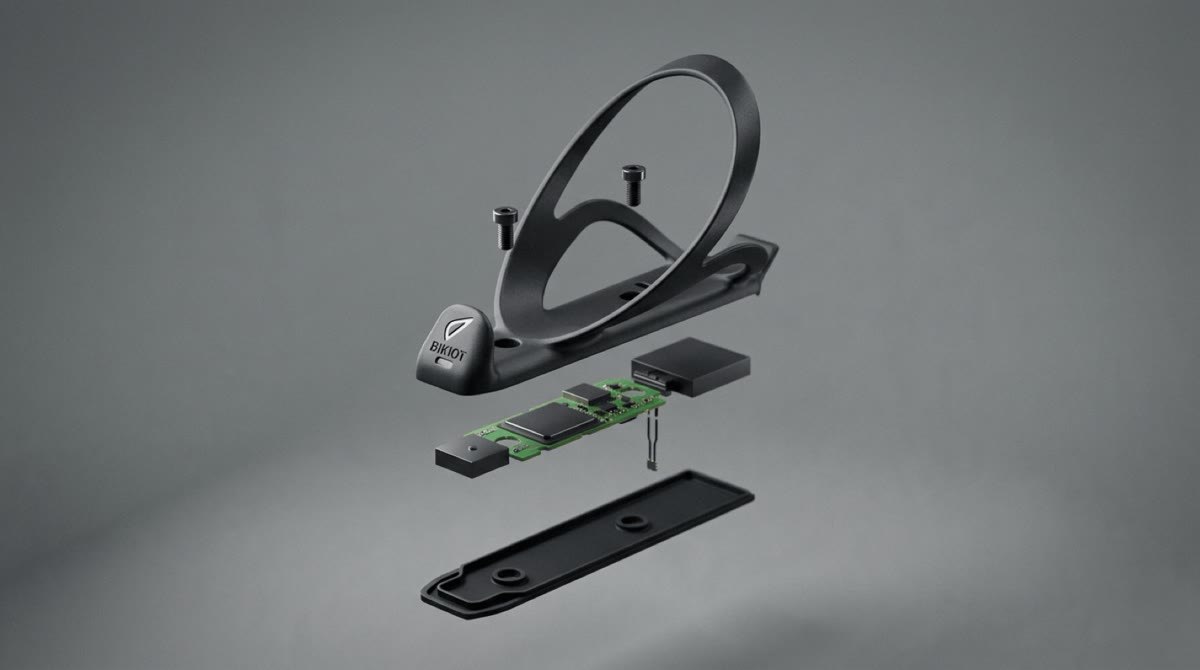
The GPS tag mounts where a bottle cage goes, a spot most bikes already have, so no custom mount is needed. Designing it meant working with the real board, battery and enclosure.
Club Bikiot
Ride stats sit next to brand-run challenges, a reason to open the app beyond checking on the bike. A loyalty layer on top of the passport, not a separate product.